I sit in front of you in the soft orange armchair, a cup of tea in my hand, a cozy sweater, glasses in a thick frame. What goes through my mind as I am listening to you? Do you wonder if I care? Do you wonder what I think? Do you wonder if I am carefully looking at the clock? How do you know that I am genuinely here for you – as a human, not just as a clinical counsellor?
As a therapist in private practice in Canada, I am often curious as to how my clients experience our space. I know that clients come in seeking support and care. Some of them come looking for relief. Some look for validation or specific solutions. But most just yearn to be heard, seen and understood in this complex journey of being a human. So we sit in front of each other, we drink tea, we talk. I see them, they see me. In therapy, the focus is always on the client. But sometimes clients are curious about me as well. Every once in a while, they make assumptions. Sometimes, they ask questions, or look for opinions or similarities. But often they are hesitant to ask questions about me directly.
I would like to change this, to de-mystify a client-counsellor relationship and ultimately show that therapy is primarily a connection between two humans. It is a type of a connection that can heal, soothe and transform. My goal is to humanize counselling process. After all, at the core of a therapeutic alliance is a conversation between two human beings. As very much a human being myself, I want to invite you to see what it is like – to sit in that chair in front of you, to hear you, to be with you and to always seer you strengths before you even notice them yourself. Come along, I will show you what it is like – to be a therapist.
- Yes, we do cry with clients.
Since therapy is primarily a work of heart, it is impossible to do this work without empathy. Sometimes the sadness and the pain are so vast that they flood the therapy room. I have cried with clients as they shared with me their losses, their grief, their longing for people, places, pets who won’t come back. Sometimes the ultimate validation and the only small comfort is seeing your own pain reflected in others. When shared, our pain transforms. We give it safe space and we let it be seen, safely. When seen, the pain shifts, the waves of the ocean of grief quell even if for a little while.
- We also cry without clients.
In fact, we do it even more so. We cry after the session, once the door is closed behind the last client of the day. We cry on behalf of clients. I have cried calling the Ministry of Children to report a sexual abuse that a teen client disclosed in session. As therapists, we are required to report abuse of minors (or elders) regardless of the confidentiality agreement. This is called our duty to protect. I have cried in frustration over my clients losing funding, losing battles with ruthless insurance companies. I have cried learning about struggles and barriers that my clients face in healthcare, families, communities. I have cried when a young and inspiring client passed away suddenly. I have cried with joy receiving a wedding invitation from a longterm client. Although of course I am not able to attend clients’ weddings or private events due to ethical rules, I still feel moved by changes in clients’ lives, their victories and wins – and also truly gutted by their losses. It is, after all, a constant work of heart.
- We do like working with some clients more. But we will never admit it.
People are all very different and we all like talking with some people more than with others. As therapists, we do see a lot of people in private practice and even more so in a community-based setting. So we truly get to interact with a lot, a lot of different personalities. It is inevitable that some clients might remind us of someone we know. Some clients might remind us of someone we cared for – or of someone we did not like so much. Sometimes client’s personal journey and dedication to healing is incredible moving, we can’t help but admire them and their choices. While at other times, client might display personality traits or behaviours that we might find quite difficult to align with. Depending on what a client brings out in us, it can be a positive thing – or an obstacle. In case of the latter, we have to work with a supervisor or another therapist to decide whether it would be more ethical to refer a client to another practitioner. Ultimately, the priority is always the client. We work hard to not let our personal preferences or opinions affect or compromise client’s healing. But if there is a chance that our ability to offer genuine and professional care is affected by something that client does or says, then we seek help and look for other solutions. It is the most ethical and honest path to take. So yes, we might like some clients more than others, but if the like or dislike is growing or changing our approach, then we might not be able to truly help this client. That is why we constantly keep track of how our work affects us.
- We also need therapy.
One way to keep track of how our work impacts us, is through our own therapy. As therapists, we are the constant conduits for a lot of human emotions and pain. It runs through us: sometimes like a gentle current, sometimes like a 220V electrical shock, and sometimes like a lightning bolt. It carves spaces in our internal emotional landscape. So it is essential for us to have a safe space of our own to process and co-process what happens to us in that therapy room. When talking to our own therapists, we never disclose names or personal details of our clients, but we do need help metabolizing what we hear and what it brings out in us. We also need to make sense of our own emotional – and very human – reactions. Moreover, it is essential that we do that, rather than keeping our own emotional responses unchecked. So we finish our sessions with our clients for the day, we go downstairs, get into the car – and take out our phone to book a session for ourselves. And on it goes: then my therapist goes to her therapist and gets support for what I have shared with her. The domino effect of compassion and care continues.
- Sometimes I do not know what to say – and it is OK.
It is true. Sometimes as a client unravels complex threads of experiences or traumas, I feel centred and hopeful that we can weave a strong healing path forward. But sometimes, I may feel lost, even for a moment, or uncertain about how to proceed or where to start. Sometimes it is overwhelming – both for the client and the therapist. Sometimes it is OK to pause and acknowledge complexity or intensity of what is going on in the room. Sometimes it is exactly the pause that is required – especially in trauma therapy, we need to proceed carefully and tread gently to avoid re-traumatizing clients. But even if we as therapists may feel be feeling stumbled, we still remain grounded in our training, experience and humanity. We acknowledge that therapy is a complex, navigational process. We honour the time and space that it takes to weave that healing path. We hold and contain complex emotions that this path evokes. We are an island in the storm. We let the waves of emotions land on our shores safely. We offer shelter to the travellers arriving to our land. Our lighthouse shines through the darkness and shows the path to safety.
When I remember this, we move forward.
6. We constantly learn.
Counselling psychology as a field grows and evolves, just like all other fields. There is lot of ongoing research that fuels popularity of new effective approaches which, in turn, account for an ever-present abundance of training opportunities. As therapists, we are required to keep up with our professional development and report our continuing education to our regulating agencies. In my case, it is a Canadian Counselling and Psychotherapy Association (CCPA). But we don’t just do it out of obligation or to keep our membership in good standing. We do it genuinely as learning and improving our skillset really does help us help our clients better. You wouldn’t want to see any professional – from a dentist to a vet, from a hairstylist to a librarian – who has not updated their knowledge in years. We all need to stay current and informed to stay effective.
7. Sometimes we feel in awe.
Sometimes I feel humbled and silenced not only by the depth and profundity of clients’ traumas but also by their resilience in the face of those traumas. In trauma therapy, there is a concept of transformative coping – also known as post-traumatic growth. It tells us that being altered in a negative way is not the only possible way to survive a trauma. In fact, even profound and layered traumas sometimes shape a person’s path in new and empowering ways. Through healing, people find a stronger voice, a more trusting relationship with self, a new ability to advocate and care for self and others. A lot of change can grow from a lot of pain. And not all that change is negative. Our scars don’t defines us – sometimes they also re-define who we are and shape our path forward. Seeing that in clients is humbling, inspiring and leaves me in awe of this incredible potential of humans not only to survive, but also to thrive despite circumstances.
8. Sometimes we feel enraged.
Sometimes we feel so powerless – especially when working with community clients who don’t have enough resources or support systems. I often feel enraged witnessing the never-ending barriers and battles that my clients face. Usually, the deeper the individual’s struggles are (especially where mental health and substance use overlap), the less access to support the people have.
It is a bitter irony of being a human – those who need the most, actually have the least.
In my community-based work, I run a drop-in free mental health support groups locally in an attempt to tilt the scale of social injustice and create accessible spaces. I deeply believe that mental health care should be universal. I believe that all humans are worthy, unique and precious. A lot can be told about a society based on how its weakest members are treated. Where I live, in Metro Vancouver area, we witness a lot of humans struggle and a lot of systems failing to care and protect the vulnerable. So I try to harness my anger at these flaws in the system and apply it towards creating low-barrier and accessible spaces. While I am a therapist in private practice, I don’t want simply to be a part of the unaccessible private care support system. In counselling training, we are taught to “meet the clients where they are”. So I take it literally – and take my skills and care to communities where care is much needed or lacking.
9. Sometimes we are late. For a good reason.
Back in grad school one of the instructors reminded us: “Don’t unzip the client if you don’t have time to zip them back”. This statement can’t be more true. It simply means that we should not be tapping into challenging or painful parts when we have just ten minutes left of the session. But sometimes this is outside of our control and a client wants to fit in a quick disclosure right at the end of the session. Sometimes, this way feels the safest to them. When it happens, I have to navigate gently this space in front of me – with my awareness of the next client waiting patiently in the lobby. In these cases, giving an extra few minutes to a space that needs it is a way better option than cutting a client short. It is a simple but a powerful thing. Giving space to difficult feelings and allowing them to speak their truths is what this profession is ultimately about. And that doesn’t always fit into a 50 minute session. So next time your therapist is running a few minutes behind, remember that they will also (hopefully) extend themselves a little bit for you as well when needed. A few extra minutes of care can go a long way sometimes.
10. We wish you asked more questions.
One of my longterm clients recently asked me where I was born. This felt refreshing, because clients rarely ask questions like this. There is always a bit of uncertainty around it, as if a client is not sure whether they are allowed to ask questions. So here is the ultimate answer: yes, you absolutely are allowed to ask your therapist questions. If they are too personal, we will gently introduce a therapeutic boundary. It is on us to navigate that space. But, in fact, the questions are rarely ever too personal or in any way inappropriate. Sometimes a simple question can increase a rapport and make the space feel lighter and more comfortable. You might find out that your therapist and you share the love for historical fiction, or that they also have two cats, or that they have also listened to Nirvana growing up – whichever those are, these pieces are small yet mighty. They don’t just built a rapport – they actually contribute to the safety of a therapeutic relationship. They help see a therapist as just another person, who is no stranger to all the spectrum of human feelings. We are in a much healthier space, when therapists see their clients primary as humans, not just as clients – and when clients can see their therapists as humans too.
As therapists we don’t usually volunteer a lot information about self (unless this disclosure is therapeutic to the client), but we don’t mind at all if you ask us questions. In fact, we welcome it and hope that answering those question can help you feel more comfortable and connected in our therapy space. Try it next time and see what your therapist responds.
11. I will pretend that I don’t know you.
Don’t be alarmed. It is normal. If I bump into you at the grocery store, I will act like I don’t know you. There is a very good reason for it. Ethically, we are obligated to not identify our clients in public. We do it out of courtesy and also to protect you. We consider client-counsellor relationship confidential. The confidentiality applies not just to what we talk about in sessions, but also to the whole relationship. So if I see you at Starbucks, at the movies or at the Christmas market, I might make eye contact but then I will look away to give you privacy. I will not say hi to you and I will not show in any way that I know you. It doesn’t mean that I am upset with you or that I don’t remember you. It means I care for you as a client.
There is one more thing though. While I can’t say hi to you in public, you can absolutely identify me and say hi to me! If you do, I will say hi back and we can have a small exchange. But I will never, ever initiate this conversation. I will act in these way to protect your privacy.
This is normal. This is not personal. This is an act of ethical care.
My hope is that reading through these notes can offer you a window into what it is like to be a therapist. This profession is a constant, powerful, humbling and transforming journey for us. It is a daily reminder of how amazing, different and inspiring people really are. I wanted to offer you this sneak peak into what it is like to be on the other side – and to show what emotions, struggles and hopes we carry with us when we leave that therapy room. Because this work shapes both of us, on both side, whether we want it or not. The conversations we have, the space we share, the journeys we go on together – it becomes a part of our journey too.
Because ultimately, we are all human.
(c) Olga Barrows, MA, CCC
http://www.feelgoodcounselling.com
Coquitlam, BC, Canada
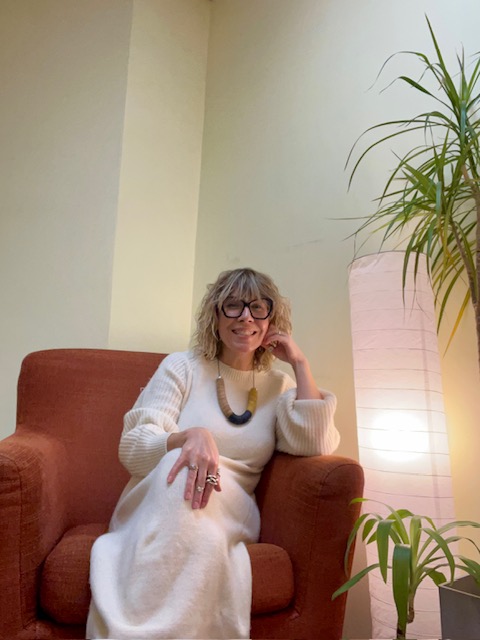
 The world according to Olga